
THE MAGAZINE FINDS YOU: FRANKIE FACCION ON 'DIE QUIETER PLEASE'
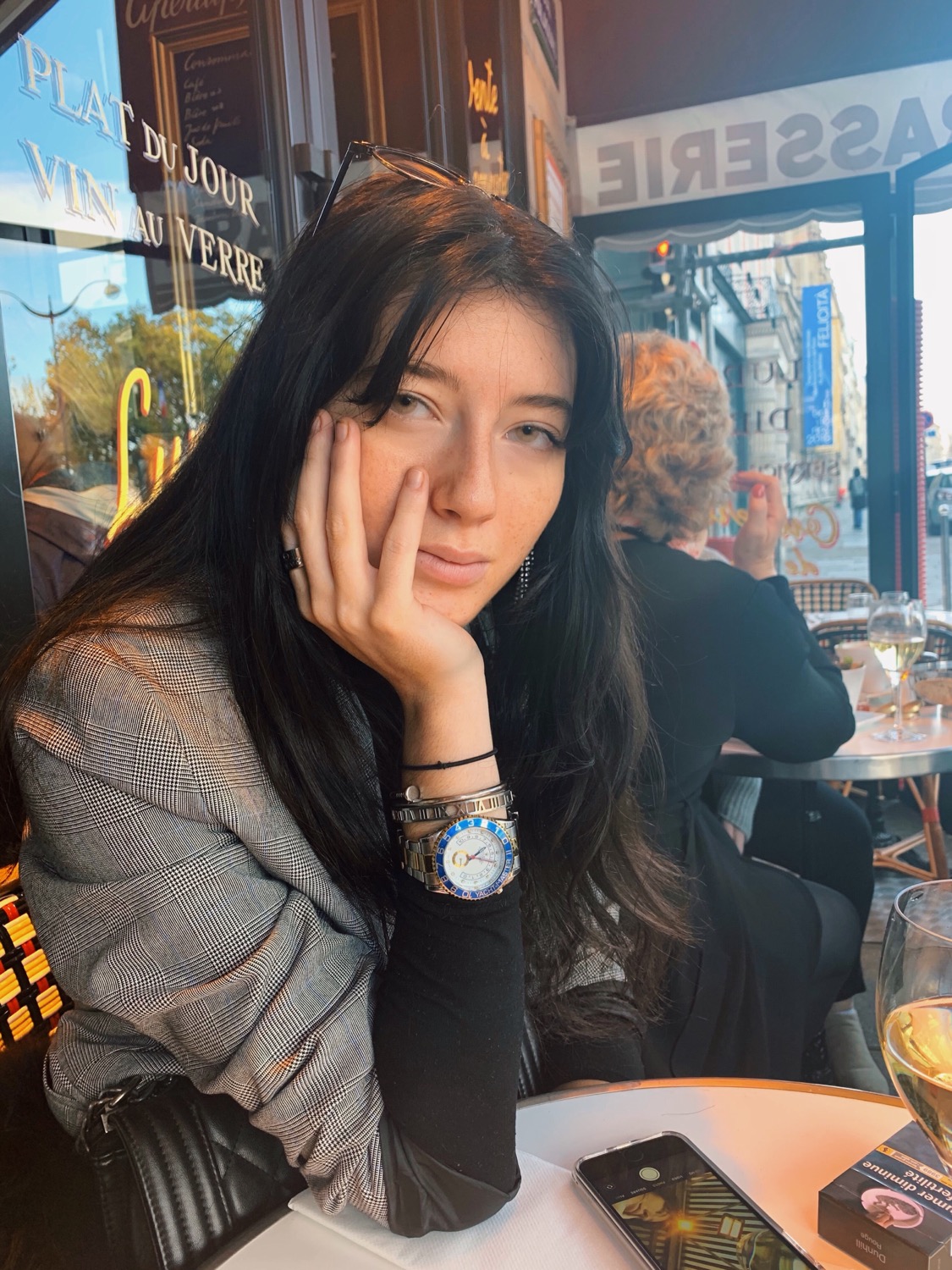
I didn’t think I would be spending my Wednesday night extolling the virtues of 2022 roleplaying game Disco Elysium. And yet, on one of the first genuinely warm evenings of London summer, I am sat outside the Euston Tap with a pint, a cigarette, and - more importantly - Frankie Faccion, founding editor of Die Quieter Please, chatting about how much the game has influenced our respective practices. I catch up with her ahead of her appearance at Minor Attractions' Summer Sessions alongside Soho Reading Series and Casual Encounterz on Friday the 29th May at The Glove That Fits, an event I have been calling the reading to end all readings.
Photography courtesy of Jacob Stratfold
Die Quieter Please began, as many good things do, in a pub garden. Faccion was sitting in the Boogaloo in Highgate with co-founder James Martin when the idea took shape. "We were just kind of talking," she says, "and we were like, why aren't there that many literary magazines in London? Ones that feel like early career writers and unpublished writers can submit kind of bizarre work that isn't necessarily represented in mainstream publishing?"
The founding impulse was a perceived absence, specifically a British one. "It came from a place of wanting to establish a more British voice in alternative literature," Faccion says, "because it felt like alt-lit and all of that stuff was so dominated by America, New York, LA." She is clear-eyed about the tradition she is working alongside. "There's such a tone associated with that kind of writing," she says, "this very clipped, transgressive Bret Easton Ellis kind of thing." Several issues later, DQP has grown from a first issue put together, by Faccion's own account, mostly drunk and with almost no working knowledge of InDesign, into one of the more distinctive publications on the London literary scene. "I didn’t even have a laptop." laughs Faccion. "I luckily just had friends around me who knew how to do stuff, who I could rope in."

Photography courtesy of Jacob Stratfold
What distinguishes DQP editorially is its approach to themes. Rather than the aesthetic argot Faccion sees as standard in literary publishing, each issue is organised around a phrase or situation broad enough to invite contradictory responses. "We really wanted to get away from the quite traditional way of theming a literary magazine, of aesthetic buzzwords that were quite specific," she says. "I feel like our themes are sayings that situate you more in a point of narrative. They express broader emotions and ideas." The two most recent issues bear this out. Silent Mass, drawn from a Croatian saying, preceded Tilting at Windmills, the current issue, themed around Don Quixote. The open call tells you that "the magazine finds you in this place, tilting at windmills, charging at shadows. You wake to halos on light bulbs. You're in a catastrophe of your own design. We ask for work that speaks of fighting imaginary enemies, chasing futile ambitions, delusion in general." Both were filtered through Disco Elysium, the video game Faccion and her editors admire enough to use as a structural reference point, writing submission briefs in its characteristic second-person style. The windmills issue opens in Robert Kurvitz’s style:
Every lightbulb has a halo. Your head is spinning from donk. Behind your eyes, red death on a canvas. Yesterday, a day at the races. You, a crusading reporter. You, spinning roulette wheels on a screen. You, Ferdinand the Bull, charging at shadows and trampling daisy chains. You were the Don. You were Don Quixote. No, no. You were Don Corleone. But not that version. Him but knackered, at the end of the film. Flannel shirt, slopping his wine, hair all askew. You were there throttling ducks, chasing fruit flies. You were convinced that lies were truth. Now you're kneeling at the shrine, thinking of Dolly. A real girl with real memories. The camera pans, the shutter closes. There's a horse-shaped hole beside you now. A dead bird still pinned to your lapel. Everything felt real. Everything felt liquid. Everything looked giant from down there.
The result placed radically different pieces in direct conversation. "We've got Oskar Oprey's story, which is one of the most demented and hilarious things I've ever read," Faccion says. "It's very Scottish, very transgressive and very rude." Back to back with that sits Ben Pester's contribution, which she describes as "one of the saddest and most attentive" things she's read. I mention how much I appreciate the ways that the magazine’s themes let authors play around, and she nods. "It's great to have themes where people can interpret them at opposite ends of the spectrum." she says. "I like these themes because they invite our audience and our writers to respond more to an atmospheric set up than a rigid prompt. And that can go in so many different directions. It's not just a buzzword. It's a feeling, an emotion, a situation. It's a video game."
Another highlight of the magazine is the extraordinary aesthetics. The team behind the magazine is constituted entirely of close friends, all of them self-taught, including editors Will Kaye and Rene Hrustić and designers and illustrators Eleni Papachristodoulou, Anna Hindmarch, and Patricia Carro García - all of them WhatsApp-ing constantly. "Most of my screen time is WhatsApp, because we're always sending each other things we find funny or stupid or interesting." Faccion laughs.
Photography courtesy of Jack Kelsey
Papachristodoulou, who has designed DQP since the first issue, came from a background in neuroscience before moving into design. Hindmarch, the in-house illustrator and art director, chose not to attend art school and studied literature instead; her influences include The Yellow Book and Aubrey Beardsley, as well as nineteenth-century printed matter sourced from the Internet Archive alongside the more contemporary vein of Instagram. From the third issue onwards, she has been DQP's sole illustrator, a dynamic Faccion draws a deliberate parallel to Beardsley's relationship with The Yellow Book. "Anna really takes the time to understand each piece," Faccion says. "She comes up with illustrations that I would never think of. Her mind is just amazing." Papachristodoulou's work outside DQP runs to maximalist, kitsch, and campy aesthetics; this maximalist sensibility is restrained in the magazine's pages, stripped back to let the work occupy the foreground. "She strips it down while preserving her flair, which really invites you to read each piece. The design resists minimalism without obstructing the stories or art." Faccion says. Carro García, who manages the website, built and designed it herself and adds an animation of each front cover.
"Me and Eleni did the whole first issue drunk and did not know what the fuck we were doing," Faccion admits. "We didn't really think it would take off. We were like, this is a fun thing, let's see what happens." The methodology, she says, has not changed enormously. "Just getting drunk a lot, going to the pub a lot, hashing out ideas together, and learning how to do this together. It's not all fun and we do work hard, but we also are just addicted to hanging out."
Photography courtesy of Jack Kelsey
The live events programme extends this social ethos into performance. Faccion traces its origins to her connections with the Windmill Brixton, whose model she found immediately compelling. "I was always fascinated by that scene because it really relied on live performances rather than digital releases," she says. "All the hype was built around these live shows and word of mouth." DQP's readings feature a live band. Readers submit musical references in advance. the band works with those through a loose rehearsal on the day, and the set is largely improvised. Faccion has had help shaping that translation from Seth Evans (black midi, HMLTD, producer of Geordie Greeps' The New Sound), whose advice and direction has been formative to the format. She explains how some writers who were meek in rehearsal routinely come to life when the crowd arrives, changing words mid-performance, finding a register they did not have beforehand. "If you get the full band behind them, who understand what they want it to sound like, it just creates something really, really special."

Alongside the print magazine and live events, DQP runs a written interview series on Substack, which Faccion describes as having started entirely by accident. "The whole interview series started incidentally," she says, "because we were trying to help our American friends get visas." A practical problem became an editorial format. The series is conducted always in person (Faccion won't do Zoom, which she acknowledges has limited the geography of interviewees so far, though expansion is planned), and operates around a simple premise: interviewees choose both the venue and the drink, and the conversation is allowed to wander. "I wanted to do an interview series that didn't feel the way a lot of interviews do with writers or artists, where you're really breaking down the form of their work and their intentions," she says. "I more wanted to get people into a real-life situation and just get them chatting and going on weird digressions, because I think that says more about the person and their work than dissecting the thing itself." The choice of location, she notes, often ends up reflecting something about the interviewee's life at that particular moment - as does their infamous closing question: what do you wish would die quietly please?
For a magazine that has built its live programme around its own intimate events and interviews, Summer Sessions represents new territory. DQP doesn't usually do traditional readings, Faccion notes, and the format will shift accordingly. The lineup includes Oskar Oprey reading from his contribution to the Titling at Windmills issue ("I can't wait," she says), alongside Yoel Noorali, who Faccion describes as "honestly one of the funniest writers in London at the moment," and Faccion herself, reading on behalf of contributor Ashani Lewis's archival piece from a previous issue. DQP contributor Gabrielle Sicam will also be reading for Casual Encounterz, who are launching a special edition of On The Rag ("America's Second Greatest Tabloid"). Faccion’s enthusiasm for Minor Attractions as collaborators is warm. "I'm a complete philistine with art," she admits, "but I feel like Minor Attractions are great because they seem to care a lot about putting on different disciplines."
Photography courtesy of jack Kelsey / Poster Design courtesy of Minor Attractions/Kieran Gaskell
As we reach the dregs of our (very tasty) IPA. I put the question that is, arguably, the most pressing one: what does Frankie Faccion wish would die quieter please? She considered a long list, she tells me, but discarded most of it for feeling pretentious. The answer she landed on is ketchup. "I fucking hate ketchup." she says. I do not tell her about my ‘rage-bait’ meal, wherein I cook spaghetti, smother it in ketchup and mayonnaise, and send photos of it to my friends for the sole purpose of causing them distress.
We sink another pint and I scoot off home. Tonight, I won’t be putting ketchup on my spaghetti. Later this week, I will be treated to some of the finest live readings London has to offer. It is, by any measure, a good time to care about literature in this city.
Reading Club @ Minor Attractions' Summer Sessions takes place Friday 29th May, 19:00 at The Glove That Fits, 179 Morning Ln, London E9 6LH. Die Quieter Please, Soho Reading Series, and Casual Encounterz are co-hosts. Fetch London is proud press partner. Tickets available here.


